Obstructive sleep apnea diagnosis and treatment in Bangladesh

Obstructive sleep apnea (OSA) is a sleep-related breathing disorder where the upper airway repeatedly narrows or closes during sleep. Airflow may drop or stop for short periods. This can cause brief arousals throughout the night and prevent the body from getting normal, restful sleep.

Many people do not remember these interruptions. The signs are often noticed in other ways. Loud snoring, pauses in breathing, choking during sleep, morning headaches or unusual daytime sleepiness can all point to a possible problem.

Prof. Dr. Kamrul Hassan Tarafder provides evaluation and obstructive sleep apnea treatment in Bangladesh for patients with snoring, nasal obstruction and other sleep-related breathing problems. The treatment plan depends on the sleep-test findings, airway condition, symptoms and the likely cause of obstruction.

Book Appointment Diagonal arrow Icon
Obstructive sleep apnea diagnosis and treatment in Bangladesh

What is obstructive sleep apnea?

Obstructive sleep apnea happens when the muscles and tissues around the upper airway relax during sleep and the airway becomes too narrow for normal breathing. In some episodes, airflow may stop temporarily before breathing starts again. The obstruction is not always in one place. The nose, tonsils, soft palate, tongue base, throat or jaw structure may all play a role.

Someone can have OSA for years without knowing it. A partner may notice the snoring or breathing pauses first. The patient may simply feel tired in the morning, struggle to concentrate during the day or assume poor sleep is normal. OSA also varies in severity. This is why symptoms alone are not enough to decide the treatment.

Obstructive sleep apnea (OSA) treatments we provide

There is no single treatment that fits every OSA patient. Some people mainly have a collapsible airway during sleep. Others also have enlarged tonsils, significant nasal obstruction, excess weight or narrowing at several airway levels. The first step is to understand what is contributing to the problem.

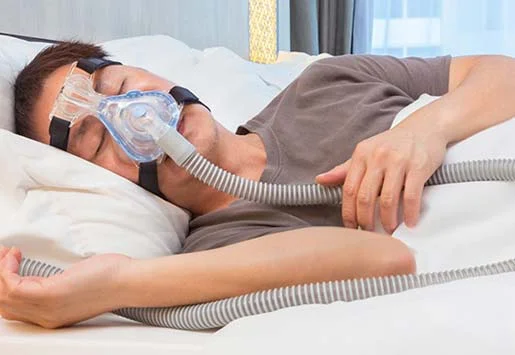
CPAP or BiPAP therapy thumb
CPAP or BiPAP therapy

Keeps the airway open so breathing stays steady through the night.

Nasal and airway management thumb
Nasal and airway management

Helps reduce congestion, allergy symptoms, or sinus swelling.

Oral appliances thumb
Oral appliances

Simple devices that adjust the jaw or tongue position to improve airflow.

Lifestyle and weight support for sleep apnea management
Lifestyle and weight support

Sometimes a small change in daily habits improves sleep quality.

Snoring treatment thumb
Snoring treatment

Useful when the soft palate, tonsils, or other structures block breathing.

Surgical correction thumb
Surgical correction

Suggested only when structural issues cause repeated blockage.

Call for
Appointment

Visiting Hour: 5pm to 9pm (Closed: Friday)

Make An Appointment
Dhanmondi Diagnostic
CTA Phone Icon+8801774080049
Taqwa Specialized
CTA Phone Icon01823-025305

Common symptoms of obstructive sleep apnea

OSA affects more than nighttime breathing. Poor-quality sleep can also affect how a person functions the following day. Not everyone has exactly the same symptoms. A spouse or family member often notices the nighttime signs before the patient does. Common symptoms include:

  • Loud and regular snoring
  • Pauses in breathing during sleep
  • Choking or gasping at night
  • Repeated waking
  • Morning headaches
  • Dry mouth after waking
  • Daytime sleepiness
  • Feeling tired despite enough time in bed
  • Poor concentration
  • Irritability or mood changes

Note: Snoring alone does not prove that someone has OSA. But regular loud snoring together with witnessed breathing pauses or daytime sleepiness deserves proper assessment.

Talk to a Specialist: 01823-025305 Diagonal arrow icon

Causes and risk factors of obstructive sleep apnea

OSA develops when the upper airway becomes too narrow or closes repeatedly during sleep. The reason is different from one patient to another. Sometimes there is an obvious anatomical problem. In other cases, several factors work together. Common causes and risk factors include:

  • Excess body weight
  • Enlarged tonsils or adenoids
  • Deviated nasal septum
  • Persistent nasal blockage
  • Large tongue or crowded upper airway
  • Jaw or facial structure that reduces airway space
  • Family history of sleep apnea
  • Alcohol, particularly close to bedtime
  • Certain sedative medicines
  • Smoking

Note: Age and other medical conditions may also affect OSA risk. This is one reason treatment should not start with assumptions. Finding the likely source of obstruction helps the doctor decide which options make sense.

Start OSA Evaluation Diagonal arrow Icon

Lifestyle changes that may support OSA treatment

Simple changes can sometimes support the main treatment, particularly when weight, sleeping position or lifestyle factors contribute to the problem. They do not replace a sleep test, CPAP or another prescribed treatment when those are needed. Depending on the patient, useful steps may include:

  • Sleep on your side if positional OSA is suspected or confirmed.
  • Work toward a healthy weight if excess weight contributes to the airway problem.
  • Avoid alcohol close to bedtime.
  • Do not stop prescribed sedative medicine on your own; discuss it with the prescribing doctor.
  • Get persistent nasal blockage properly assessed.
  • Use CPAP or another prescribed OSA treatment consistently.

A few general sleep-hygiene changes may make sleep more comfortable, but they cannot correct significant airway obstruction by themselves.

How obstructive sleep apnea is diagnosed

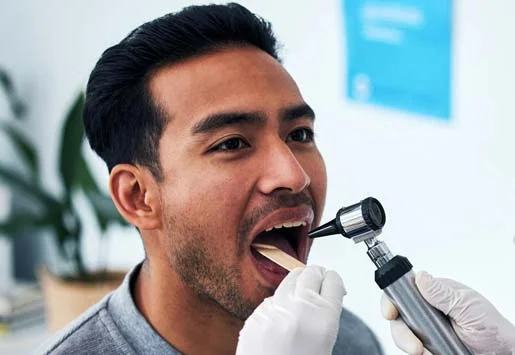
Diagnosis starts with the symptoms. The doctor may ask about snoring, breathing pauses, choking during sleep, morning headaches, daytime tiredness and sleep quality. Information from a spouse or family member can also be useful because the patient may not know what happens while asleep. The nose, mouth, throat and upper airway are then examined for possible narrowing or obstruction. An ENT assessment may identify problems such as:

  • Deviated nasal septum
  • Enlarged turbinates
  • Enlarged tonsils
  • Narrow throat space
  • Soft-palate abnormalities
  • Tongue-base crowding
  • Other upper-airway obstruction

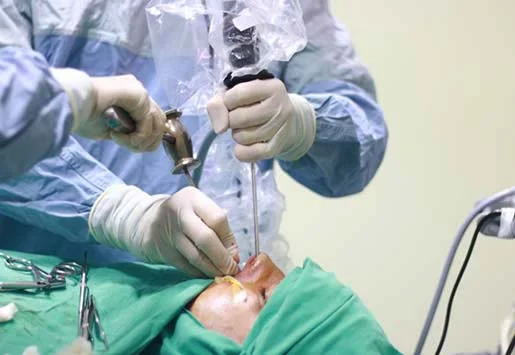
Note: Nasal endoscopy may be used when a closer examination of the nasal passage and related structures is needed.

Sleep test for obstructive sleep apnea

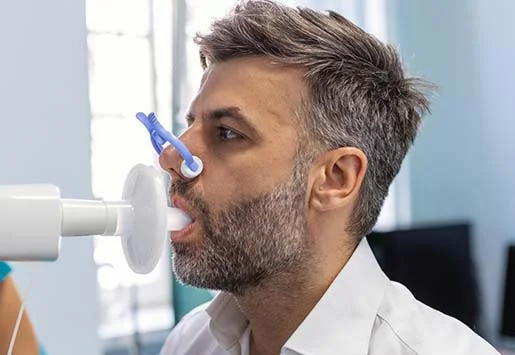
A sleep study is generally needed to confirm OSA and understand its severity. Depending on the patient, testing may involve an overnight laboratory sleep study or suitable home sleep apnea testing. The test can provide information about breathing disturbances during sleep and help the doctor understand whether the OSA is mild, moderate or severe. The result helps guide treatment because snoring alone cannot confirm obstructive sleep apnea.

Schedule an OSA Assessment Diagonal arrow Icon

When is surgery considered for obstructive sleep apnea?

Not every OSA patient needs surgery. Surgery becomes more relevant when examination shows a structural obstruction that can reasonably be treated, or when other appropriate treatment has not provided enough control. The decision should consider the sleep-study result, severity of OSA, airway examination, symptoms, age and overall health.

  1. Confirmed OSA on a sleep study: Surgical treatment should normally be discussed after OSA has been properly diagnosed. Knowing whether the condition is mild, moderate or severe also helps with treatment planning and provides a baseline for follow-up.
  2. Large tonsils or adenoids: Enlarged tonsils or adenoids can significantly reduce upper-airway space, particularly in children but also in some adults. When they are a major part of the obstruction, removing them may form part of the treatment plan.
  3. Persistent nasal obstruction: A deviated septum, enlarged turbinates or another nasal problem can make nighttime breathing and CPAP use more difficult. Nasal surgery may be considered when significant obstruction remains despite appropriate medical treatment. Its role depends on the patient's complete airway findings and OSA treatment plan.
  4. Difficulty tolerating CPAP: Some patients find CPAP difficult even after working on mask fit, comfort and pressure-related issues. Surgery is not automatically the next step for everyone who struggles with CPAP. The airway first needs to be assessed to determine whether a treatable anatomical obstruction is present.
  5. Oral appliance is unsuitable or ineffective: An oral appliance does not work for every patient. If it is unsuitable, cannot be tolerated or does not control the OSA adequately, the doctor may need to consider another treatment route.
  6. Obstruction at several airway levels: Not all sleep apnea comes from one point in the airway. Some patients have narrowing at the nose, palate, and tongue base at the same time. Selected patients may therefore need a planned multilevel approach after detailed assessment.
Talk to an ENT Specialist: 01823-025305 Diagonal arrow icon

Why choose Prof. Dr. Kamrul Hassan Tarafder for OSA treatment?

Are you looking for a sleep and ENT specialist for ongoing snoring or suspected sleep apnea? Prof. Dr. Kamrul Hassan Tarafder assesses the nose, throat and upper airway before deciding how an ENT problem may be contributing to disturbed breathing during sleep.

The focus is not simply on stopping snoring. The aim is to identify the problem properly, review relevant sleep-test findings and choose treatment according to the individual airway condition. Patients can receive support with:

  • Nasal blockage assessment
  • Snoring and upper-airway evaluation
  • Nasal endoscopy when required
  • Tonsil and throat examination
  • Soft-palate and tongue-base assessment
  • Guidance on appropriate sleep testing
  • Review of available sleep-test findings
  • Treatment planning based on the diagnosis
  • Surgical assessment when an anatomical blockage is present
  • Follow-up for sleep-related breathing problems

Prof. Dr. Kamrul Hassan Tarafder has extensive experience in ENT practice and the assessment of upper-airway disorders.

Consult Now Diagonal arrow Icon
Guidance for sleep-related breathing issues

Consult an ENT specialist for obstructive sleep apnea

Snoring may look like a small problem at first. It becomes more important when it comes with breathing pauses, choking during sleep, poor sleep or daytime tiredness. Prof. Dr. Kamrul Hassan Tarafder evaluates the nose, throat and upper airway in patients with suspected obstructive sleep apnea.

Sleep-test findings and structural airway problems are reviewed before a treatment plan is suggested. If these symptoms are happening regularly, arrange an assessment rather than continuing to guess what is causing them. Call 01823-025305 or book an appointment with Prof. Dr. Kamrul Hassan Tarafder.

Book an Appointment Diagonal arrow Icon

FAQs about obstructive sleep apnea

People with obstructive sleep apnea often have questions about snoring, sleep tests, CPAP and whether surgery will be needed. The answers below cover some common concerns patients may have before seeing an ENT specialist for OSA assessment.

Is loud snoring always a sign of obstructive sleep apnea?

No. Many people snore without having obstructive sleep apnea. But loud, regular snoring together with breathing pauses, choking, gasping or strong daytime sleepiness needs more attention. A spouse or family member often notices these nighttime breathing changes first.

How is obstructive sleep apnea diagnosed?

Diagnosis usually starts with the patient’s sleep problems, snoring pattern and medical history. The doctor may check the nose, mouth, throat, neck and upper airway for any obvious narrowing. A sleep study is often needed to confirm OSA and see how often breathing is disturbed during the night.

Do I need a sleep test for obstructive sleep apnea?

In many cases, yes. A sleep study helps confirm whether OSA is present and how mild or severe it is. Depending on the patient, the test may be done overnight in a sleep lab or with suitable home-based equipment.

Can obstructive sleep apnea be treated without surgery?

Yes. Surgery is not required for every OSA patient. Depending on the severity and cause, treatment may include weight management, changing sleep position, managing contributing nasal problems, CPAP or an oral appliance. The right option depends on the sleep-test findings and individual airway condition.

Does CPAP work for obstructive sleep apnea?

CPAP is a commonly used treatment for OSA. A mask delivers pressurised air while the patient sleeps, helping keep the airway from closing. Getting the right mask fit and following the prescribed treatment regularly are important, especially during the first few weeks of use.

Does OSA affect the heart?

Yes, untreated OSA can put extra strain on the body over time. It may be linked with high blood pressure and other heart-related problems. This is one reason ongoing snoring with breathing pauses should not be ignored.

Can OSA be cured?

It depends on what is causing the airway blockage. Some structural problems may improve a lot with the right treatment, including selected ENT procedures. Weight control, better sleep habits, nasal treatment, CPAP or other options may also help manage the condition.

অবস্ট্রাকটিভ স্লিপ অ্যাপনিয়ার প্রধান লক্ষণ কী?

জোরে ও নিয়মিত নাক ডাকা, ঘুমের মধ্যে বারবার শ্বাস বন্ধ হওয়া, হাঁপিয়ে বা দম নিয়ে জেগে ওঠা এবং পর্যাপ্ত সময় ঘুমানোর পরও দিনে অতিরিক্ত ঘুম পাওয়া—এসব OSA-এর পরিচিত লক্ষণ। সকালে মাথাব্যথা, মুখ শুকিয়ে থাকা, মনোযোগ কমে যাওয়া বা সারাদিন ক্লান্ত লাগাও হতে পারে। অনেক সময় রোগীর চেয়ে পরিবারের অন্য সদস্য আগে ঘুমের মধ্যে শ্বাস বন্ধ হওয়ার বিষয়টি লক্ষ্য করেন।

অবস্ট্রাকটিভ স্লিপ অ্যাপনিয়ার ক্ষেত্রে কখন অস্ত্রোপচার প্রয়োজন হতে পারে?

সব OSA রোগীর অস্ত্রোপচার লাগে না। স্লিপ টেস্টে OSA নিশ্চিত হওয়ার পর যদি নাক, টনসিল, তালু, জিহ্বার গোড়া বা শ্বাসনালির অন্য অংশে স্পষ্ট গঠনগত বাধা পাওয়া যায়, তখন নির্বাচিত রোগীর ক্ষেত্রে অস্ত্রোপচার বিবেচনা করা হতে পারে। CPAP বা অন্য উপযুক্ত চিকিৎসা সহ্য করতে না পারলেও কিছু ক্ষেত্রে সার্জিক্যাল মূল্যায়ন প্রয়োজন হতে পারে।

Disclaimer: The information published on this website is provided solely for awareness and educational purposes. It is not intended as a substitute for professional medical advice. Always consult a qualified specialist or physician before making any medical decisions.

Arrow